

You are halfway through your working day. The inbox is filling up as fast as you want it to be, meetings are dragging longer than expected, and the office feels warm 🥵.
Suddenly you find yourself struggling to concentrate, feeling unusually tired, or becoming impatient with a colleague.
If this scenario sounds familiar, you are not alone!
We often blame these moments on stress, a bad night's sleep, or simply having a bad day. But what if the temperature around us is also playing a part?
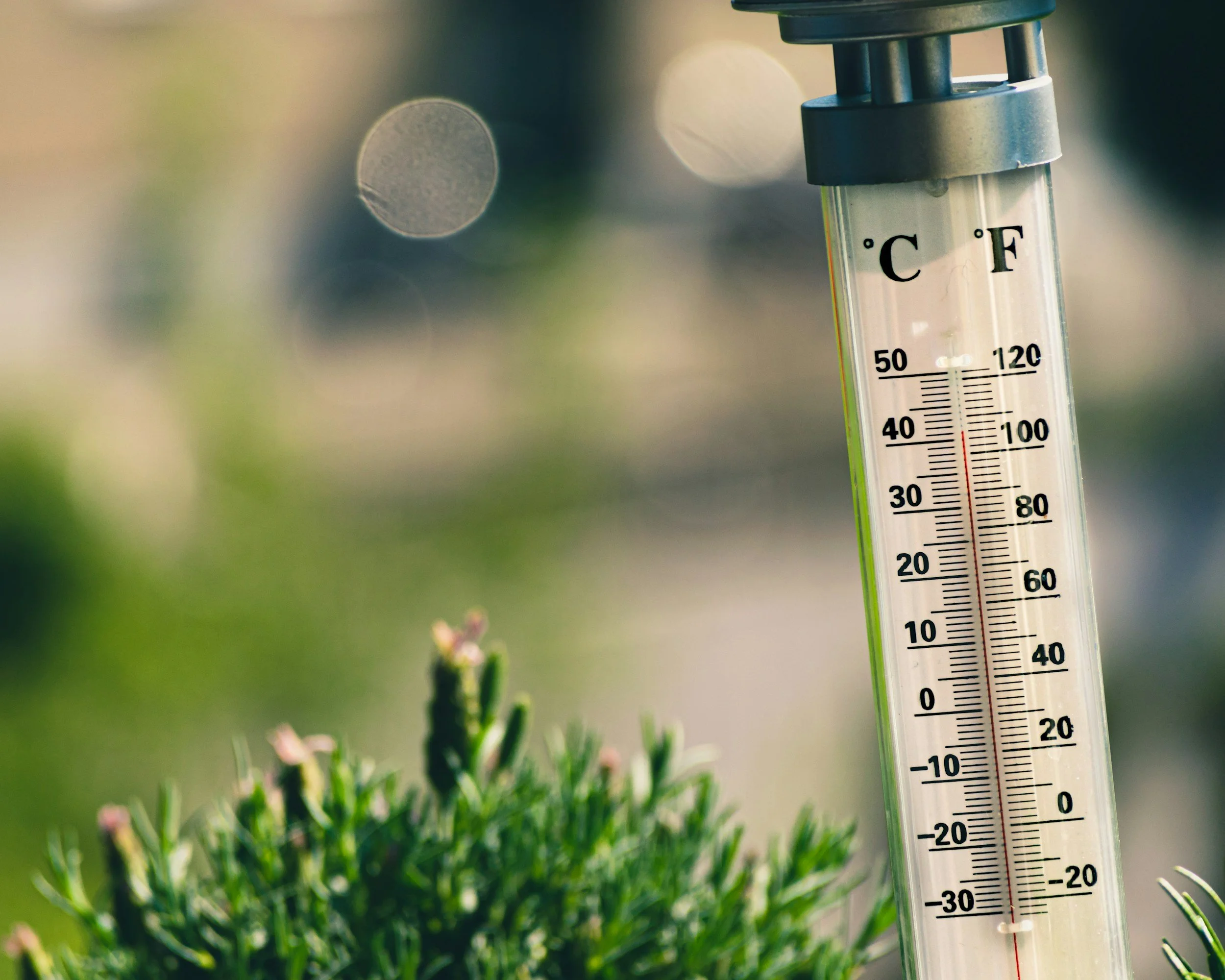
Photo by Sumekler on Unsplash
Why Does Heat Make Us Feel More Irritable?
Weather and temperature are probably two of the most common topics for small talk. Yet, how often do we consider their relationship with our psychological wellbeing?
Research suggests that temperature can influence more than our physical comfort. It may also affect how we think, feel, sleep, and manage everyday demands.
You have probably noticed that your patience seems to disappear more quickly on a particularly hot day. Perhaps you become frustrated with things that would not normally bother you or find it harder to concentrate during a meeting.
Feeling irritable or impatient in the heat is not about having a bad temper. It is a physiological response.
Our body is constantly working to maintain a stable internal temperature. When the environment becomes uncomfortably hot (or cold), our body has to work harder to cool (or warm) itself down. As it spends extra energy just trying to stay balanced, our brain has fewer resources left to regulate emotions. That can increase psychological distress and make us more emotionally sensitive (World Health Organization, 2026).
So, it doesn’t mean that heat automatically makes us irritable. Rather, physical discomfort may be one of several factors influencing how we respond to everyday stress.
Does the Weather/Temperature Affect Everyone in the Same Way?
We often associate sunshine with happiness and gloomy weather with sadness. But is this really true for everyone? NO.
In a study examining the relationship between weather and mood, Klimstra and colleagues (2011) identified four different patterns of weather sensitivity among adolescents and their mothers.
Summer Lovers ☀️: Those who tend to experience better moods during warmer, sunnier weather.
Summer Haters ☀️🙅: Those whose moods tend to be worse during warmer, sunnier weather.
Rain Haters ☔🙅: Those who tend to experience worse moods on rainy days.
The Unaffected: Those whose moods show little relationship with changes in weather.
In other words, while some of us feel energised by a warm, sunny afternoon, others may find the same weather exhausting or uncomfortable. And some might not notice much difference at all.
Of course, these four patterns do not mean everyone fits neatly into one category. The study simply reminds us that our responses to weather can be very different.
Age, health conditions, medications, and our ability to adapt to heat can also influence how well our bodies tolerate uncomfortable temperatures (World Health Organization, 2026).
So, the next time your colleague seems perfectly comfortable while you are struggling with the heat (or cold), remember that we do not necessarily experience temperature in the same way. What feels comfortable to one person may be uncomfortable to another.
What About Our Sleep 💤?
Temperature does not stop influencing us when the working day ends. Warm nights can follow us into the next day. Several studies found that warmer nighttime temperatures can mean more time awake and less deep sleep (Okamoto-Mizuno & Mizuno, 2012).
Imagine waking up after a restless night in a warm room. You might have spent seven or eight hours in bed, yet you wake up feeling tired, find it harder to focus, have less patience, or struggle more with everyday demands.
So, it is not always about how many hours we sleep. The environment in which we sleep matters too.
So, does That Mean Weather Causes Mental Health Problems?
Not quite. It’s not a straightforward relationship.
Although research suggests that extreme weather and temperature can affect physical and psychological wellbeing, this does not mean they will automatically cause someone to develop a mental health condition.
Our psychological wellbeing is influenced by many interconnected factors, including our physical health, sleep, relationships, working environment, and personal circumstances. Weather and temperature are two parts of the larger picture.
It is also worth remembering that occasional irritability, tiredness, or difficulty concentrating does not necessarily indicate a mental health problem.
The important thing is to recognise how our environment might be contributing to how we feel and function. Rather than immediately judging ourselves for being impatient or unproductive, perhaps we can start by asking whether there is something in our surroundings that needs attention.

Let's Clear Up Some Myths
Before we dive deep into what to do, let's address some common misconceptions.
Myth: Temperature only affects our physical, not our mental health.
Truth: Temperature may affect both physical & mental wellbeing. Research found that exposure to high temperatures is associated with poorer mental health outcomes.
Myth: Warm and sunny weather lifts everyone's mood.
Truth: Weather affects people differently. Some enjoy warm weather, some prefer cold weather, and some are unaffected by it.
Myth: Feeling more irritable on a hot day is a matter of attitude.
Truth: Heat may contribute to psychological distress and changes in emotional responses.
Myth: Heat affects everyone equally, regardless of age, health or medication.
Truth: Some people are more vulnerable to heat-related health risks. Older adults, people with certain chronic health conditions, and people taking particular medications may experience greater heat sensitivity.
Myth: Room temperature has little impact on sleep quality.
Truth: Temperature is an important part of a healthy sleep environment.
Myth: Heat-related health issues only happen to people working or exercising outdoors under direct sun exposure.
Truth: Heat stress can affect people indoors and outdoors.
Myth: We only need to drink water when we feel thirsty.
Truth: Thirst may not be a sufficient early warning during prolonged heat exposure.
Making Our Environment Work Better for Us
We cannot control the weather, but that does not make us completely powerless. Sometimes, supporting our wellbeing begins with making small adjustments to the environment around us.
Here are three simple strategies to consider.
Plan around the heat. Heat can slow our thinking, so schedule our most demanding tasks for the coolest part of the day.
Cool your space. Use a fan 🪭 or other suitable cooling, improve ventilation, or find the coolest spot we can.
Take a five-minute break. When we notice our focus slowly fading, pause. A short reset is worth it.
A little planning can help us manage physical discomfort and protect our energy for the things that matter.
Remember, wellbeing is not always about doing more.
Sometimes, it begins with noticing what we need and allowing ourselves to respond.
You’ve got this!
Klimstra, T. A., Frijns, T., Keijsers, L., Denissen, J. J., Raaijmakers, Q. A. W., van Aken, M. A., Koot, H. M., van Lier, P. A. C., & Meeus, W. H. J. (2011). Come rain or come shine: Individual differences in how weather affects mood. Emotion, 11(6), 1495–1499. https://doi.org/10.1037/a0024649
Okamoto-Mizuno, K., & Mizuno, K. (2012). Effects of thermal environment on sleep and circadian rhythm. Journal of Physiological Anthropology, 31, Article 14. https://doi.org/10.1186/1880-6805-31-14
World Health Organization. (2026, July 31). Heat and health. https://www.who.int/news-room/fact-sheets/detail/climate-change-heat-and-health


