

Have a Good day!

Photo by Alexas_Fotos on Unsplash
“I’m not afraid of storms, for I am learning how to sail my ship.”
Who doesn't want smooth sailing?
A day when everything goes as planned feels like a good day 😅.
We often start each day expecting things to go smoothly with minimal drama. We feel we can focus better and be more efficient on those days. So it's not surprising that the image of a "good" day in our heads looks like a smooth day, a productive day, or a day that ends with us feeling happy and accomplished.
Reality check!
Life doesn't always move as we want it to. We oversleep, receive an urgent email notification, encounter bad weather, and so on….
So, does that mean the day is “bad”? What about the day that starts with “drama” but turns out better? Is that a “good” or “bad” day?
In social psychology, there are two types of wellbeing (Ward & King, 2017):
Hedonic wellbeing ("feeling good") is the psychological experience of positive emotion while minimizing negative emotions. Think about having a nice cup of tea, a laugh with friends, etc.
Eudaimonic wellbeing is deeper. It extends wellbeing beyond personal feelings and involves meaning and purpose. It's the sense that our lives have meaning beyond what we accomplish today.
Findings from a 2022 study published in Frontiers in Psychology showed that to have a "good" day, we need both types of wellbeing. People who searched for both feeling good and meaning at the same time showed higher levels of wellbeing, physical and mental health, and life satisfaction than those who only focused on one type (Kreiss & Schnell, 2022).
Moreover, Martin Seligman, "the father of positive psychology", suggests that wellbeing is built through positive emotion, engagement, relationships, meaning, and accomplishment in his PERMA model (Al-Hendawi et al., 2024).
So, if we translate these to our daily lives, it means that having a good day is not only about achievement or accomplishment but also being fully engaged in our activities, having meaningful connections and conversations, and sensing that our effort matters.
Time of Day Matters
Understanding what makes a good day is one thing. Knowing when we're most likely to experience it is another. Research shows our capacity for these positive experiences isn't constant throughout the day.
Bu et al. (2025) found that time of day does matter to wellbeing, with people generally waking up feeling best and feeling worst around midnight. They also found mental health and wellbeing tend to be better in summer and on weekends compared to weekdays.
So, are you doomed if you're a night owl 😱?
Of course not!
It's more about knowing ourselves better so we can schedule our most meaningful activities strategically. Planning to have a challenging conversation or focused creative work when our brain and mood are naturally higher can shift how the whole day feels.
Redefining What "Good" Means
With an understanding of what makes a good day and our natural rhythms, we can have a fairer way of measuring our days.
We’ve been taught to measure a "good day" by the weight of our output or achievement. How much we checked off the “never-ending” task list, how many emails we cleared, and so on and so forth. If we only use output or achievement as the measurement, it won't be surprising if many days feel like we're not doing enough, like a good day just isn't for us. There will always be another task, another obligation, another deadline.
But if we start to include connection, meaning, slowing down, and recovery, we might see that days are not just good or bad.
Perhaps a good day is not only about how much we gave. It is also about whether we were allowed to return to ourselves.
So, a good day may not look perfect and impressive. It may not even look especially productive from the outside. But if our day has small progress, some meaningful connection, and a short recovery, that day may have been more valuable than we realized ✌.
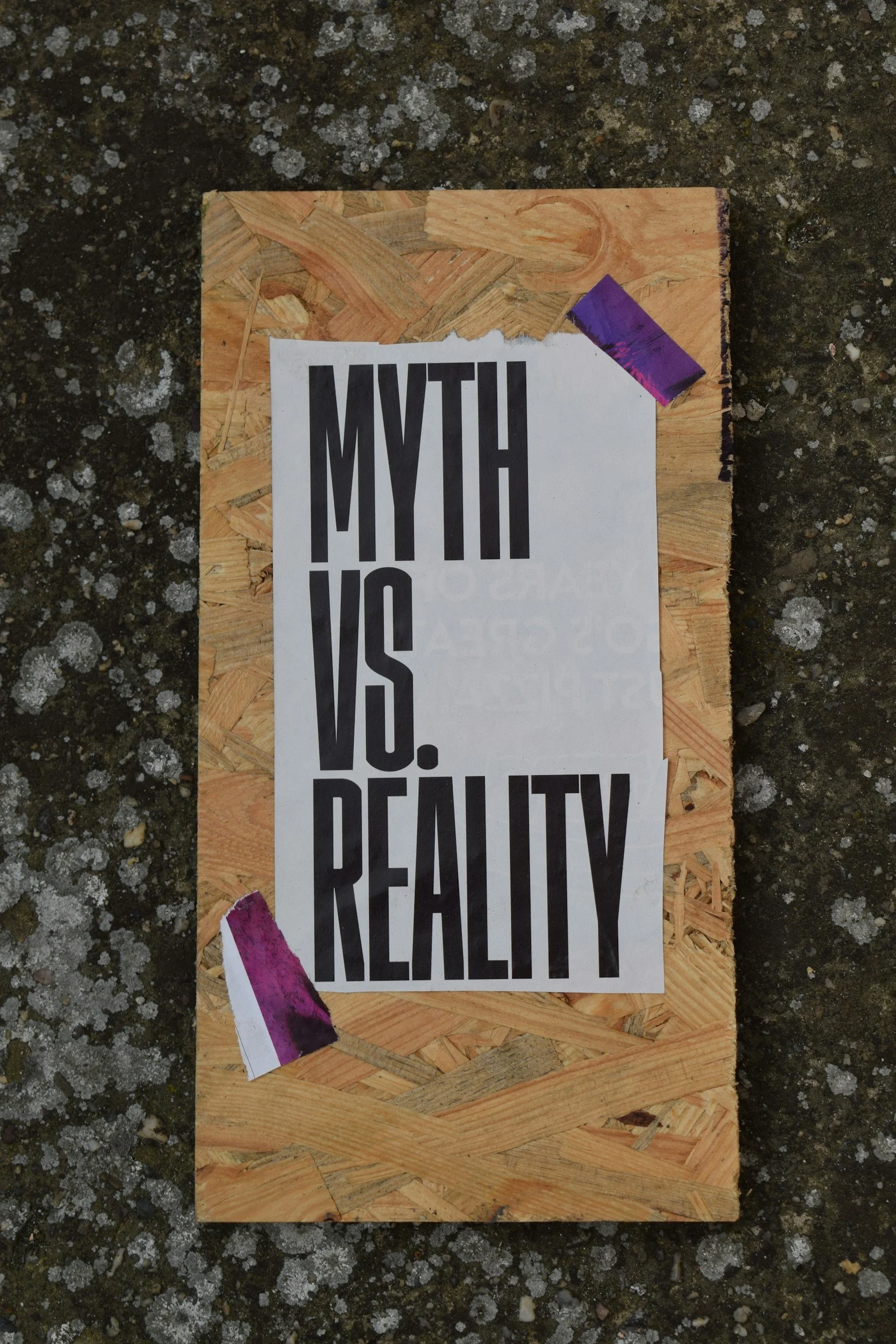
Let's Clear Up Some Myths
Before we dive deep into how to design our day, let's address some common misconceptions about having a good day.
Myth: A good day means being happy 24/7.
Truth: On a good day, we can still feel negative emotions. What matters is how to navigate the negative emotions and not get stuck with them.
Myth: One bad moment ruins the whole day.
Truth: A rush morning, a frustrating email, or a challenging meeting should not define our day. It’s more important on learning how to come out from those moments.
Myth: A good day means a no-stress day.
Truth: Not all stress is bad. There are two types of stress: a good stress, or "eustress" (that motivates and improves performance without overwhelming), and a bad stress or “distress”. A healthy challenge still can make our day a good one.
Myth: I should not feel stressed because I have many things to be grateful for.
Truth: We can feel grateful and stressed at the same time. They are not the opposite of each other.
Myth: A good day is a day when everything is great and impressive.
Truth: Some good days can be just a quiet and peaceful day.
Myth: Good days happen naturally to some (lucky) people and not to everyone else.
Truth: Good days can be built intentionally. We can choose how to focus our attention, spend our time meaningfully, and make the day a good day.
Myth: A good day is only possible when everything goes well externally.
Truth: A study by Harvard shows that our internal experience and how we choose to respond to the events matter more than what actually happens externally.
The "✨Glimmer✨" Hunt
At the start of each day, set an intention to look for your glimmers. Small moments of joy or calm.
Instead of asking:
“What would make today perfect?”
Try asking:
“Where might I find small moments that make today feel meaningful or grounding?”
These glimmers can include:
A calm cup of tea before work
A supportive conversation
A quiet lunch break
Stretching after a long meeting
Listening to music during the commute home
Research suggests glimmers help us feel grounded and create the sense of living a meaningful life.
Monthly Challenge: Design Your Days
Want to take it a step further? Instead of reacting to our days, let's get curious about them instead.
Week 1.
Keep a daily log 📝.
At the end of the day, answer 3 questions in a short form and not more than 5 minutes.
What charged my “battery” (energy) today? What drained it? Did I connect with anyone in a meaningful way (Y/N)?
Week 2.
Look at the log and find the patterns.
Are there moments that consistently charge my energy? How about the moments that consistently leave me drained? What helped me recover?
Week 3.
Make one change 🔄 intentionally, based on your observation data. The change can be small but it can create or protect each day to be a good day.
Week 4.
Find a time and reflect (write or voice-record your reflection) 💭.
Has our definition of a "good day" shifted this month?
Anything surprised you?
Remember, at the end of the day,
a good day is less about what we got done
and more about how much we stayed with ourselves through it all.
You’ve got this!
Al-Hendawi, M., Alodat, A., Al-Zoubi, S., & Bulut, S. (2024). A PERMA model approach to well-being: A psychometric properties study. BMC Psychology, 12(1), 414. https://doi.org/10.1186/s40359-024-01909-0
Bu, F., Bone, J. K., & Fancourt, D. (2025). Will things feel better in the morning? A time-of-day analysis of mental health and wellbeing from nearly 1 million observations. BMJ Mental Health, 28(1), e301418. https://doi.org/10.1136/bmjment-2024-301418
Kreiss, C., & Schnell, T. (2022). Have a good day! An experience-sampling study of daily meaningful and pleasant activities. Frontiers in Psychology, 13, 977687. https://doi.org/10.3389/fpsyg.2022.977687
Ward, S. J., & King, L. A. (2017). Work and the good life: How work contributes to meaning in life. Research in Organizational Behavior, 37, 59–82. https://doi.org/10.1016/j.riob.2017.10.001


