

When Real Life Keeps Getting Pushed to “Later”
Some of us try to be productive and tell ourselves, “I’ll go for my dream holiday after this project,” or "I'll be happy when I get the promotion". On the surface, it can look like discipline, ambition, or responsibility. But underneath, it can become something else. A habit of postponing life itself, which is also known as Delayed Life Syndrome.
Delayed Life Syndrome is not a clinical diagnosis. It is a pattern of thinking where life gets placed on hold until some future condition is met. The promotion. The right timing. More confidence. More money. More certainty.
The problem is that the target keeps moving, and the present quietly becomes an infinite waiting room ⏳⏳⏳.

Photo by Eutah Mizushima on Unsplash
What is Delayed Life Syndrome?
The idea was first introduced by Russian psychologist Professor Vladimir Serkin in 1997. He observed that some people believed their “real life” would only begin once they moved somewhere better (Serkin, 1997). More recently, psychologist Kurt W. Ela PsyD described it as a pattern where the present gets continuously pushed aside for a future that is expected to feel safer, better, or more complete (Ela, 2025).
This is what makes it different from healthy delayed gratification.
Healthy planning has a clear purpose and a realistic path. We study for an exam. We save for a home. We work toward a defined goal. Delayed Life Syndrome is different. It keeps adding one more condition before you are allowed to feel settled, happy, or fully alive 😵💫.
Why are most of us adults so vulnerable to this syndrome?
For many adults, this pattern looks highly functional!
Keep going.
Stay productive.
Meet our deadlines.
We tell ourselves we are being responsible.
But unknowingly, the present keeps shrinking. In professional life, this may sound like:
“I’ll take a real break after this quarter.”
“I’ll switch careers when I feel more ready.”
“I’ll enjoy life once I hit my next milestone.”
“I’ll reconnect with people once things calm down.”
The issue is not future planning. The issue is when the future becomes the only place where life is allowed to happen.
What is happening underneath?
Delayed Life Syndrome is often driven by more than poor time management. It can be shaped by emotional and psychological patterns such as:
Perfectionism
When our worth feels tied to getting things right, even small steps can feel risky. Delaying can become a way to protect ourselves from failure, disappointment, or shame.
Low self-esteem
When someone feels “not good enough yet", they may keep postponing the life they want, believing they must first become more successful, more certain, or more complete.
Tunnel thinking
Sometimes one goal becomes so dominant that everything else gets ignored. Relationships, rest, joy, and health are treated as things to return to later.
Procrastination as emotional relief
Research shows that procrastination is often about emotion regulation, not laziness. We delay because a task, decision, or change brings up discomfort such as fear, uncertainty, boredom, grief, or self-doubt. The delay brings short-term relief but often returns later as guilt, stress, and regret 😥.
Social and cultural messaging
Many of us were taught, often with good intentions, that enjoyment must be earned. Finish school first. Work hard now. Rest later. Be practical first. Live later. Over time, this can shape a mindset where pleasure, rest, and meaning are repeatedly postponed.
The cost of always waiting
When left unchecked, this pattern can wear down both wellbeing and performance.
It can contribute to chronic stress and burnout because rest and satisfaction are continually deferred. It can increase feelings of emptiness, anxiety, or low mood because meaningful needs are left unmet. It can also strain relationships when work, planning, and future goals take priority over present connection.
In other words, delayed living may look productive from the outside, but internally it can become exhausting.
So, what are the signs we may be stuck in delayed living?
See if any of these feel familiar……
You keep postponing enjoyment until you “deserve” it.
You struggle to rest without guilt.
You believe life will finally begin after one more milestone (and one more…and one more!).
You keep important decisions on hold to avoid regret.
You rarely let yourself enjoy progress along the way.
You are always preparing for life, but not quite living it.
Noticing the pattern is not about blaming yourself. It is about building awareness. Once a pattern has a name, it becomes easier to challenge it.
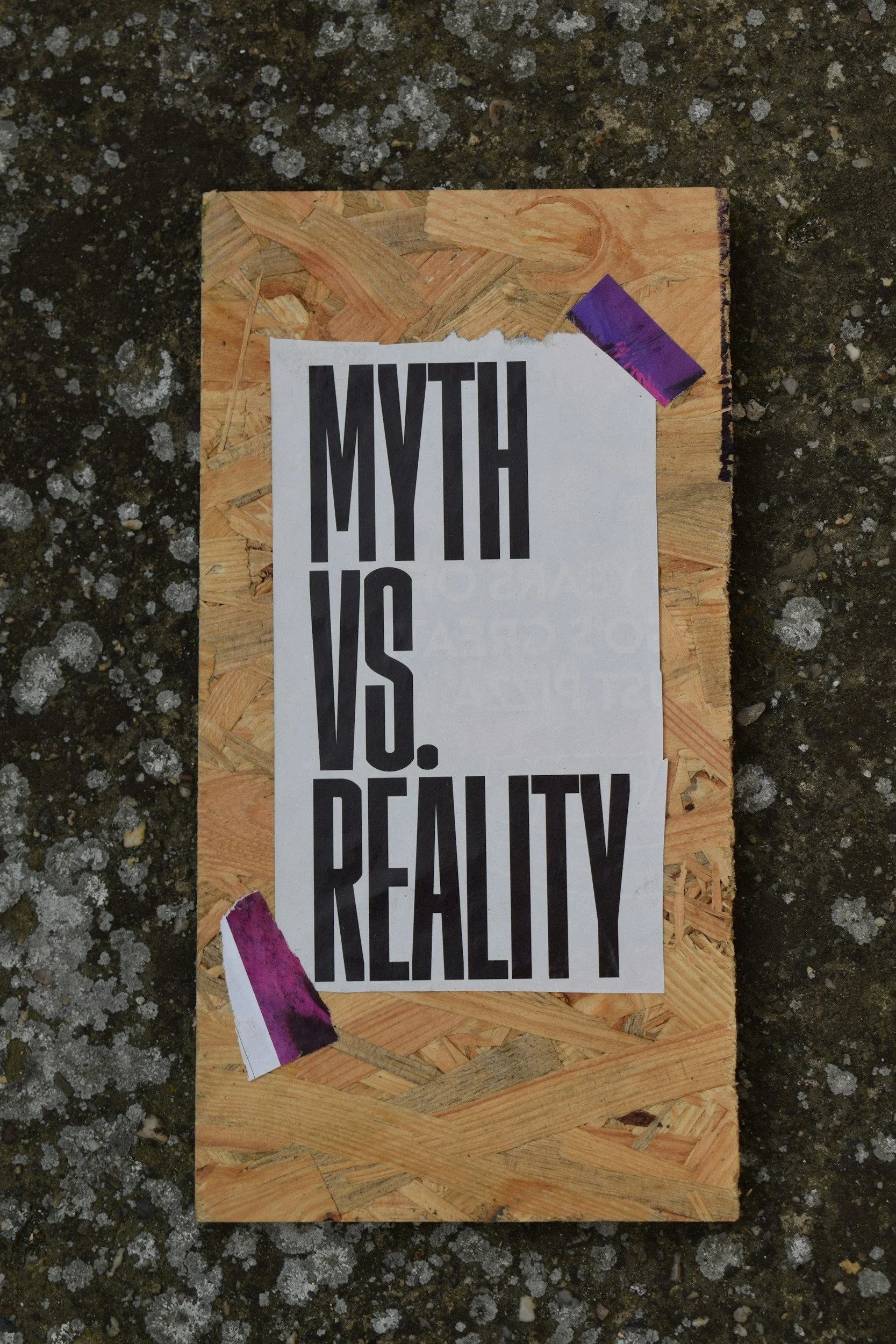
Let's Clear Up Some Myths
Before we dive deep into what to do, let's address some common misconceptions that might be making us living in the “waiting room” ⏳.
Myth: I need to feel motivated before I begin.
Truth: Starting small often creates momentum to act. Motivation often follows that act.
Myth: Saving "nice things" for later is wise.
Truth: If we’re saving the "nice things" only for a special occasion, that special occasion might never come.
Myth: I’ll finally relax when I retire.
Truth: Relaxation is a skill. If we don't practice it now, we won't know how to do it after retiring.
Myth: Once I hit the next milestone, then I’ll finally be happy.
Truth: Research shows satisfaction after goals often fades quickly. Without pausing and enjoying the moment, the next milestone becomes another moving target.
Myth: Not deciding meaning my options open and I’ll not regret.
Truth: Not deciding is still a decision. Staying in status quo to avoid regret might link with anxiety and missed opportunities (… and regret in the future!).
Myth: I must fix myself completely before I deserve a better life.
Truth: Study shows that waiting to feel perfect keeps us stuck. Acting in line with our values, even while imperfect, is what improves life quality.
Myth: Delaying in enjoying my life means being disciplined and future‑oriented.
Truth: Healthy planning includes care and enjoyment in the present. When we keep sacrificing our life now, our well‑being and satisfaction go down.
A more helpful way forward
We do not need to abandon our goal and ambition. We do not need to stop planning.
The goal is to bring life back into the present while still moving toward the future.
So, how about starting with one small pleasure?
Choose one thing you have been postponing for “a better time” and do a smaller version of it this week.
Visit that café ☕🥯🍪. Take that walk 🏕️🌿🌲🌳.
The point is something simple. This is to practise giving permission to ourselves.
This matters because when we allow ourselves small moments of meaning, pleasure, and accomplishment now, we start weakening the belief that life must always wait.
To Be.
Want to take it a step further? Choose one of the challenges below and do it!
Challenge 1.
Write a list of three things you have been postponing for your future self.
For each one, ask: What is the smallest version of this I could do this week to bring me closer to the things?
Do this exercise each week and notice how you feel at the end of the month. Anything different?
Challenge 2.
Spend 10 minutes journaling on this question:
If my life were already "the good life", what would I be doing differently this week?
Then identify one thing from that answer to act on before the month ends!
What did you notice? Anything surprised you?
Remember, being careful is not the same as putting our life on hold.
Being productive is not the same as living meaningfully.
So, don’t turn the present into an infinite waiting room.
Understanding our pattern in delaying our lives is about learning
to give permission to enjoy life as it is, not just as it will be or it must be.
You've got this!
Ela, K. W. (2025, October). Could you have delayed life syndrome? Psychology Today. https://www.psychologytoday.com/us/blog/decade-of-childhood/202510/could-you-have-delayed-life-syndrome
Lynch, P. I (2025, July 11). Delayed life syndrome. Prague Integration. https://pragueintegration.cz/delayed-life-syndrome/
Sarkisyan, N., & Vlasov, E. (2020, July 28). How to cope with the delayed life syndrome. Snob.Ru. https://snob.ru/moskva-i-moskvichi/chto-takoe-sindrom-otlozhennoj-zhizni/
Schuenemann L, Scherenberg V, von Salisch M and Eckert M (2022) “I’ll Worry About It Tomorrow” – Fostering Emotion Regulation Skills to Overcome Procrastination. Front. Psychol. 13:780675. doi: 10.3389/fpsyg.2022.780675
Serkin, V. P. (1997). Social and Psychological Sources of North-East of Russian Migration. Personality in Extreme Conditions, 2(1).
There is no time like the present! Delayed life syndrome and how to cope with it. (2024, November 5). Lectera Magazine. https://lectera.com/magazine/articles/there-is-no-time-like-...


