

Why Watching Sports Might Be Better for Us Than We Think
It's Monday morning, you're running on five hours of sleep, and you'd do it all over again because last night's match went to the final minute. Tired and thrilled at the same time.
If you've spent the last few weeks glued to a screen, back-to-back soccer matches, a weekend race, or other late-night games, you're not alone, and you're NOT wasting your time!
Because it turns out that watching sports can do more for us than fill an evening ✌️.
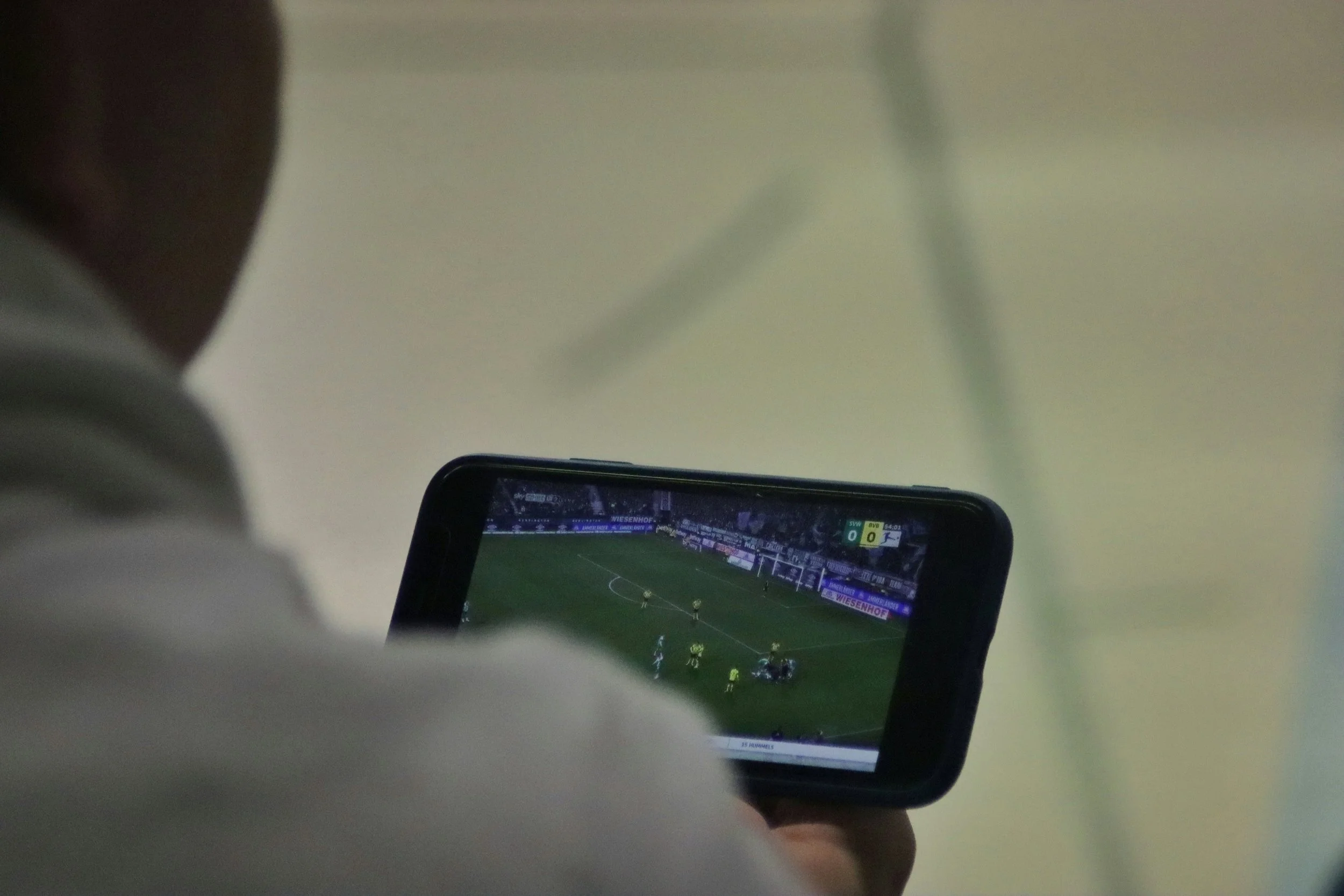
Photo by (Augustin-Foto) Jonas Augustin on Unsplash
So, is it just entertainment?
If you think that the moment we switch on a game, we will switch off our brain, you are wrong!
A growing body of research suggests there is more to that. Watching sports can quietly support how we feel, think, and connect. Not as a replacement for a good life, but as a small, genuine boost inside one.
What our brain does when we watch sports
Researchers at Waseda University set out to test this properly, using a mix of large-scale data, surveys, and brain scans (Kinoshita et al., 2024). One part of their work looked at data from around 20,000 participants and found a steady pattern. People who watched sports more often reported higher wellbeing.
Then came the interesting part. In a separate neuroimaging study, they scanned people's brains and found that watching sports lit up the brain's reward circuits, the same systems tied to pleasure and motivation. Moreover, frequent viewers showed greater grey matter volume in those reward regions.
In plain terms, regular sports viewing may gently shape the brain's reward system over time, pointing to longer-term mood benefits rather than a quick hit that fades by morning.
Why watching with others somehow different than watching alone
The brain science is only half the story. The other half is social connection. Watching sports tends to pull people together, and that togetherness is where a lot of the value lives.
One study found that watching sports creates shared emotional moments, which strengthen social bonds, which in turn feed our sense of wellbeing (Guo et al., 2024). It works like a chain. The feeling and the connection reinforce each other.
That's why watching the final with friends feels nothing like watching it alone at midnight. The cheering and the group chat lighting up? They are the connection.
There's also belonging. Psychologist Daniel Wann has long argued that the more we identify with a team, the more we feel part of something (Wann, 2006). Fans who feel a part of a team's community often report less loneliness and more satisfaction with life. Not because of the sport itself, but because of the sense of "US" it creates.
The catch
None of this is a free pass to sit still for six hours with a bowl of chips 🥤🥗🍔🍗🍟🥓 and sugary drinks 🥃🍷🍾🥂🍻!
Watching sports can support wellbeing, but the way we watch matters. Long stretches of sitting, poor sleep, snacking on autopilot, or stress-fuelled betting can tip the benefits the other way, working against your health rather than for it.
So the goal isn't to watch more. It's to watch well.
Keep perspective after a loss. Set a sensible limit on screen time. Let the excitement move you off the couch rather than deeper into it.

Let's Clear Up Some Myths
Before we dive deep into what to do, let's address some common misconceptions.
Myth: Watching sports is a waste of time.
Truth: Watching sports provides mental breaks and enjoyment. Sports also teach resilience, teamwork, and discipline; and our brains learn through observation.
Myth: Only athletes benefit from sports.
Truth: Everyone can learn valuable life lessons from sports, including resilience, emotional control, patience, and performing under pressure.
Myth: Watching sports makes people more aggressive.
Truth: Aggressive is an unhealthy emotional expression that comes from other factors, not the sports itself. Instead, watching sports can bring excitement and joy as a healthy emotional expression.
Myth: Sports fans are just emotionally invested for no reason.
Truth: Supporting a team creates a sense of belonging. Feeling connected to a community is linked to better psychological wellbeing.
Myth: Sports are only about winning.
Truth: Sports also show perseverance, growth after failure, teamwork, leadership, and learning from mistakes.
Myth: The happiness from sports fades the moment the game ends.
Truth: Shared memories, stories, and bodily experiences while watching the games continue to stay well after the final whistle.
Myth: Watching sports is a solitary, passive activity.
Truth: People build friendships, strengthen family relationships, and create lasting traditions through watching sports together. The social ritual around the watching does make a different.
A more helpful way forward
Watch with people, not just a screen. Invite a friend, a colleague, or a family member, in person or over a video call. Presence isn't the point, interaction is. Talk, cheer out loud, text someone watching elsewhere, join a group chat. The shared reaction is where the wellbeing lives.
Turn the game into movement. Stretch at half-time. Take a walk to reset between matches. Let the buzz of the event be a nudge to move your body, not an excuse to stay planted.
Keep it in proportion. Enjoy the highs, ride out the lows, and remember it's a game. That perspective is what keeps watching a source of joy rather than stress.
Remember, cheering for a team was not always about win or lose.
It's about the emotional experience and the connection.
Watch with intention, make the connection, and let the game do what it does best.
You've got this!
Guo, J., Yang, H., & Zhang, X. (2024). How watching sports events empowers people's sense of wellbeing? Frontiers in Psychology, 15, 1471658.
Kinoshita, K., Nakagawa, K., & Sato, S. (2024). Watching sport enhances well-being: evidence from a multi-method approach. Sport Management Review, 27(4), 595 to 619.
Wann, D. L. (2006). Understanding the positive social psychological benefits of sport team identification. Group Dynamics: Theory, Research, and Practice, 10(4), 272 to 296.


