

Music & Me
The end of the year always seems to bring a mix of emotions in us, feeling both excited and overwhelmed at the same time 😮💨. Joy mixes with pressure. Connection mixes with exhaustion. The holiday is coming, and suddenly we find ourselves balancing work, family plans, social events, next year's planning and so on and so forth.
At the same time, this time of the year is when we can hear music (almost) everywhere. It fills shops, homes, cars, and gatherings. But do you know that music is not just background noise?
Indeed, music ₊˚♪ 𝄞₊˚⊹, can be a tool that helps calm our nervous system, steady the mind, and support emotional balance during this demanding time of year. So, why not?
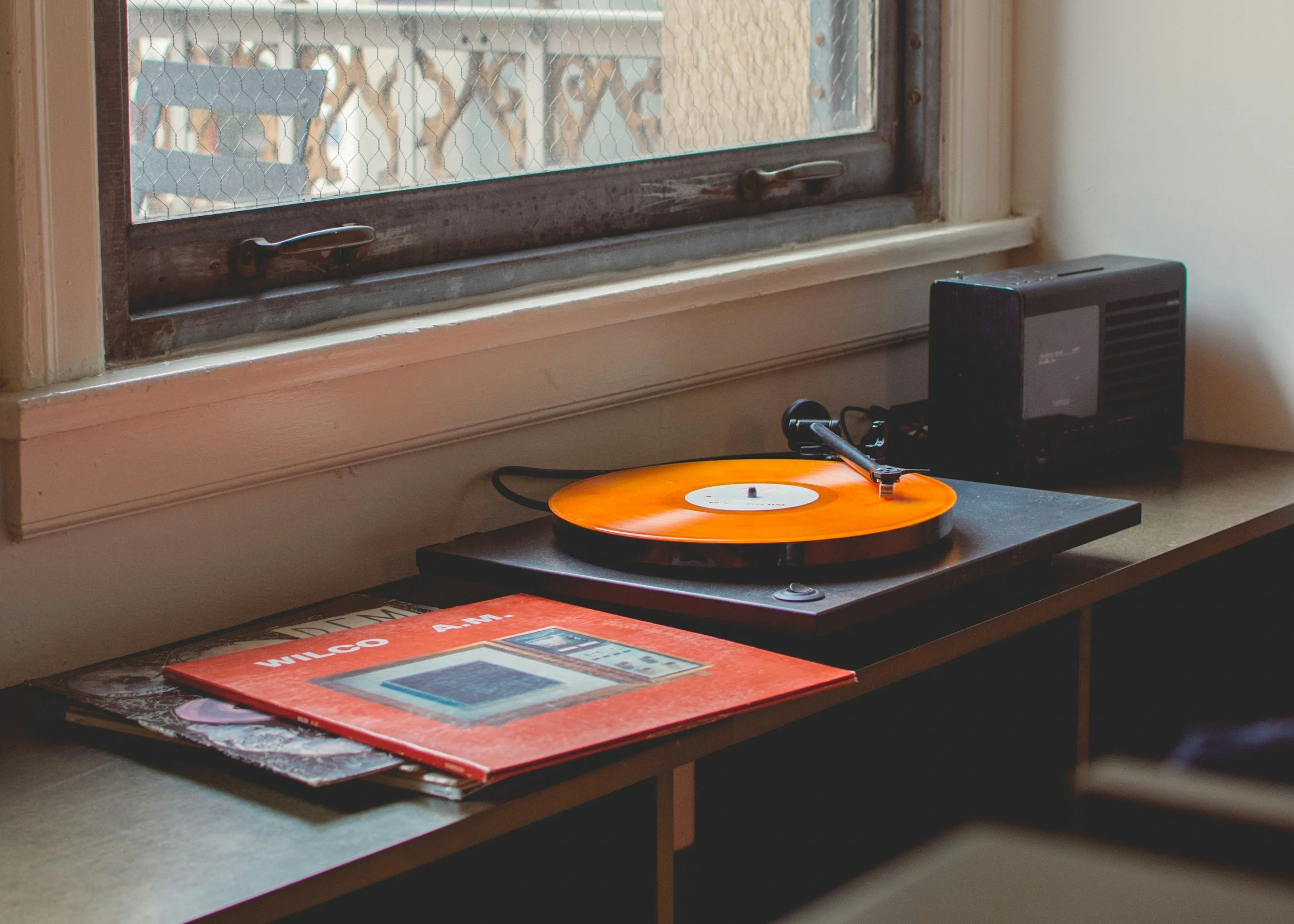
Picture by Travis Yewell on Unsplash
Why Music Helps Us Feel Better:
The Body-Mind Connection
When we listen to music, powerful things happen in our bodies.
Our stress system slows down.
Our autonomic nervous system (ANS), the part that controls stress responses, breathing, and heart rate, responds directly to music. Research shows that soothing music activates our parasympathetic nervous system, the part that helps us relax and recover, while turning down our sympathetic nervous system, which drives our stress response (Thoma et al., 2013). This is why certain songs can make our shoulders drop and our breath slow.
It helps regulate emotions.
A study on adolescents by Saarikallio & Erkkilä (2007) shows that people naturally select music that matches their current emotional state and then use it to shift toward the emotion they want to feel. Another study by Groarke & Hogan (2018) reveals that music can support emotion regulation strategies like reappraisal and distraction, reducing negative affect while boosting positive mood.
It lowers cortisol.
Relaxing music has been shown to reduce levels of cortisol, the stress hormone (Lai & Li, 2011). Lower cortisol helps with clearer thinking, steadier emotions, and better sleep. A recent article on BBC (Hirschlag, 2025) even reported studies showing how music helps reduce cortisol levels in animals 🐘🦏🦒🦁🦓 like dogs, elephants, and gorillas. Besides lowering cortisol, it also helps them develop better eating and sleeping habits and stronger immune systems.
It gives your brain a steady pattern.
Music gives our brain a 'safe' pattern. Anxious minds tend to race, with thoughts jumping from one worry to the next. Music with a predictable, steady rhythm (especially around 60-80 beats per minute) gives our brain a calm, external pattern to "latch onto." This process, known as entrainment, helps our brainwaves "sync" with the slower rhythm, pulling us out of fast, erratic thinking.

So What Does This Mean for Us during these holidays?
During the holidays, understanding why music works becomes incredibly valuable.
Feeling drained after a long workday or holiday gathering?
A playlist with warm, steady rhythms can help you recharge.
Overwhelmed by expectations or family pressure 🪫😵💫?
Gentle music can help you pause and reset.
Struggling to stay present?
A familiar song can act like an anchor and bring you back to yourself.
Music can help anchor us. Music is accessible, practical, and supportive. You can use it almost anywhere without preparation or cost.
In short, music isn't just background sound to fill silence or accompany our commute or gym session. It's a tool to train our nervous system, which in turn helps us show up better, think more clearly, and live with more energy.
Practical Ways to Use Music This Month
⭐ Start your morning intentionally.
Choose calming or uplifting music for your morning routine rather than jumping straight into news or social media. This helps your nervous system start the day in a regulated state.
😌 Create an evening wind-down.
Play slower music or nature sounds an hour before bed to help your system shift toward rest.
🎧 Set a brief "listening ritual".
Block out 5-10 minutes at transitions (end of day, lunch break) to put on a track, sit back, breathe slowly (inhale 4 counts, exhale 6 counts), and allow your nervous system to shift.
🍃 Practice mindful listening.
Set aside five minutes, listen to one song without multitasking. . Notice the instruments, tempo, and your body's response. This kind of focused listening might help regulate your stress levels.
The key is simple. Pick music that feels right to our body, not what we think we should like. Your nervous system knows what it needs.
This Month’s Challenge: The ONE.
Choose ONE stressful point in your daily routine.
Morning wakeup, the commute, starting a big task, ending the day. Anything.
Pick ONE song or a short playlist that you will use only for that moment.
Repeat for ONE week and see what you notice in your energy, focus, or mood.
The goal isn't perfection. Some days we might only manage one listening session. That's still progress. We're teaching our nervous system that rest and regulation are possible, one song at a time.
Ready to start? What song will you choose for tomorrow?
Music isn't just background noise.
It's a tool we can use to actively manage our internal state, shifting our body from "stressed" to "safe."
Taking care of our nervous system doesn't require hours of meditation or expensive retreats.
Sometimes, it just takes the right song at the right moment.
Groarke, J. M., & Hogan, M. J. (2018). Music listening as a strategy for managing everyday emotions in younger and older adults. Psychology of Music, 46(6), 886–903.
Hirschlag, A. (2025, November 24). Does music make animals calmer? BBC Future. https://www.bbc.co.uk/future/article/20251121-does-music-make-animals-calmer
How Music Relieves Anxiety: A practical neuroscience guide to calming your brain. (n.d.). ENO. https://getenophone.com/blogs/news/how-music-relieves-anxiety-a-practical-neuroscience-guide-to-calming-your-brain
Lai, H. L., & Li, Y. M. (2011). The effect of music on biochemical markers and self-perceived stress among first-line nurses. Journal of Clinical Nursing, 20(7-8), 1091-1098.
Saarikallio, S., & Erkkilä, J. (2007). The role of music in adolescents' mood regulation. Psychology of Music, 35(1), 88-109.
Thoma, M. V., La Marca, R., Brönnimann, R., Finkel, L., Ehlert, U., & Nater, U. M. (2013). The effect of music on the human stress response. PLoS ONE, 8(8).


