

New Year, Same Triggers, Different Response
You just returned from holiday last Sunday, and now, Monday morning at 9am, you're back at your desk, and instead of feeling refreshed, you're fighting with an unexpected wave of anxiety, sadness, or dread. You tell yourself, “Seriously? The New Year just started, and it’s the first out of 52 weeks to come 😵💫😩!”
Sounds familiar?
If this sounds familiar, take a deep breath. You're experiencing something completely normal and what's known as post-holiday blues.
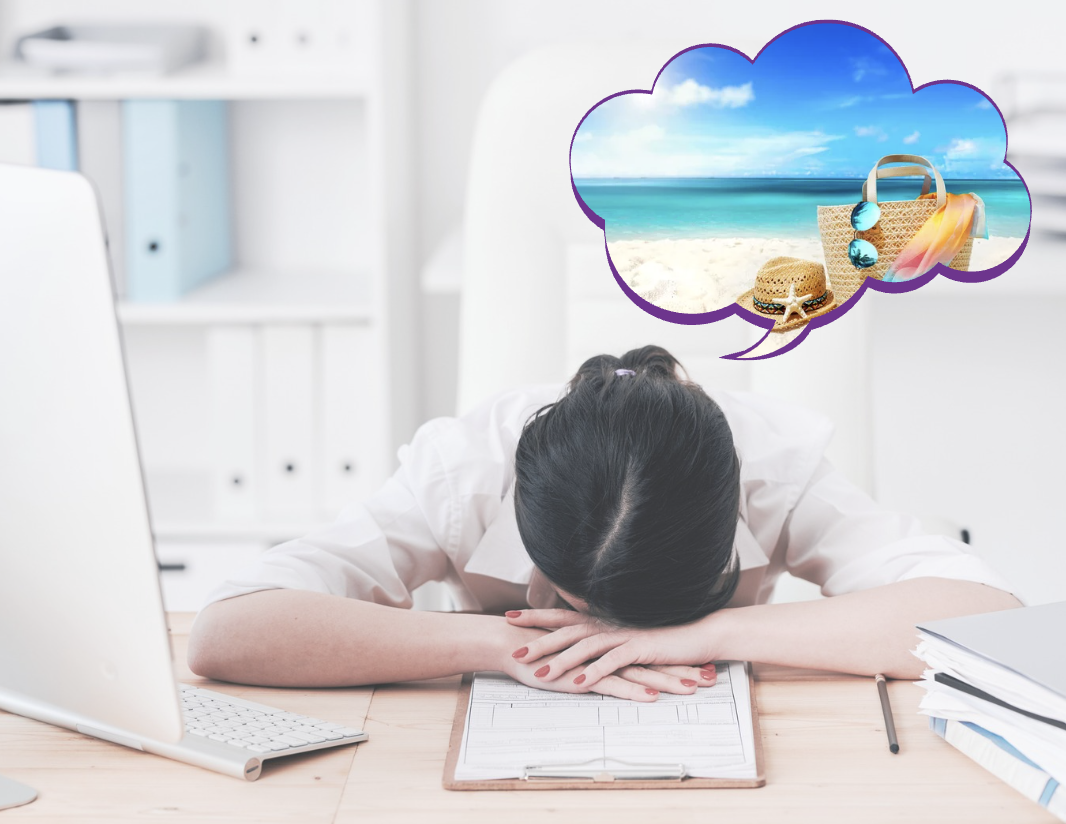
Source: Canva
Why This Happens?
These reactions are more than just a case of "Monday blues." It’s not laziness and (obviously 😎) not weakness!
During the holiday, our stress hormone levels likely decreased. Our sleep patterns may have changed; we moved differently, ate differently, engaged with different people, and did activities in ways that felt more aligned with what we actually wanted to do, rather than what we had to do. We have the freedom and autonomy to choose and decide. Our nervous system, having adjusted to these rhythms, now needs to reorganise quickly! This is a physiological and psychological shift from rest and relaxation to responsibility.
This transition is what we call post-holiday blues or post-holiday syndrome. It describes the mixed emotions we feel when transitioning from the freedom and flexibility of holidays back into structured work life. Common symptoms include low mood, irritability, anxiety, lack of motivation, fatigue, and even mild physical symptoms like headaches or disrupted sleep.
Research by Nawijn et al., (2010) found that while holidays do increase happiness, that boost often has a short lifespan. It tends to disappear quickly upon returning to our daily and routine life. The gap between the freedom, autonomy, and novelty of holiday vs the routine and pressure of life and work is often the trigger for the crash. This situation worsens if our work and day-to-day activities feel overwhelming or unfulfilling. And….what makes it more intense after the New Year holiday is our invisible expectation and a culture that demands a “New Year, New Me” mentality 😰.
Psychologically, holidays meet core human needs: freedom, fun, connection, rest, and a sense of autonomy (Deci & Ryan, 2000). When these are removed abruptly, our minds can experience a sort of emotional withdrawal. The greater the contrast between our holiday experience and our normal day-to-day life, the stronger the crash often feels.
How Long Does It Last?
It really depends on the individual (boring answer!). Some of us bounce back within a few days, while others experience this for a week or so.
When to Seek More Help
While there's no right and wrong answer, it is necessary to notice if the low mood stays for longer than a month. When this happens, it's worth reflecting more deeply if the stress and low mood are really about post-holiday blues or if it's something more, such as misalignment in our work, lifestyle, or expectations.
Let's Clear Up Some Myths
Before we dive deep into what to do, let's address some common misconceptions that might be making you feel worse or shameful.
Myth: If you feel anxious or depressed about returning to work after a holiday, something must be wrong with you.
Truth: These feelings are a perfectly normal human response. Your nervous system is adjusting from holiday mode back to work mode.
Myth: If you are experiencing post-holiday blues, it means you're weak, lazy or unmotivated.
Truth: Post-holiday blues is a brain withdrawal response which is similar to sadness and disappointment when fulfilling experiences are suddenly removed from our life.
Myth: You just need to "snap out of it" and get back to work.
Truth: A gentle start, beginning with lighter tasks and gradually picking up the workload, helps our brain and body transit slowly, which can reduce overwhelm.
Myth: Only people who dislike their jobs or are in the wrong career feel post-holiday blues.
Truth: Even those who love their work can feel a sense of loss when leaving behind rest, freedom, fun, or time with loved ones.
Myth: Other people don't struggle with returning to work after holiday.
Truth: Most people experience some version of post-holiday blues. Social media and workplace culture often mask how common these feelings are, creating unnecessary shame or isolation.
Myth: Everyone recovers from post-holiday blues at the same rate.
Truth: Recovery time varies by individual. Some bounce back in a few days; others take a week or more.
What You Can Do Right Now
Here's one actionable strategy to help ease the transition.
Don't try to clear your backlog in one day! Take it slowly. Instead, prioritise and focus on what really matters.
Do plan for some enjoyable and fun activities after your return. They can be as simple as having lunch with friends, going for a cycle or a movie, or picking up a new hobby.
Remember that the goal is to give our mind something to look forward to, reducing the sense of withdrawal that our brain experiences after the holiday.
Build Your Emotional Regulation Skills with AAAA.
Want to take it a step further? Try this four-week challenge:
Week 1: Assessment.
Notice your emotional reactions. Just notice them without trying to make any changes. Then, try to identify the top 3 trigger patterns.
Week 2: Awareness.
Continue Week 1 activities + journal your reactions, which can be thoughts, feelings, or actions.
Week 3: Action.
Continue Week 2 activities + respond with STOPP ⛔:
Stop: Stop what you're doing for 5 seconds.
Take a breath.
Observe: What am I thinking? What am I reacting to? Where am I feeling it in my body?
Put in some perspective: "Is this fact or opinion?", "This emotion is giving me information about......"
Practice to choose: What's the best thing to do for me now in this situation? What response serves my goals right now?
Week 4: Adopt.
Continue Week 3 activities + create your new "Emotion Regulation standard operating procedure (SOP)”, based on your week 1 to week 3 experiences.
You may also want to reflect on: "What triggered the strongest reaction this month? How did I successfully respond instead of react?"
While going back to our routine life after a nice holiday can be overwhelming, we can soften the "landing" by regulating our emotions, from being reactive to being responsive to the situation.
Be patient with yourself. Give yourself the time and space to readjust.
And most importantly, keep something joyful on your calendar to look forward to.
You've got this!
Nawijn, J., Marchand, M. A., Veenhoven, R., & Vingerhoets, A. J. J. M. (2010). Holidayers happier, but most not happier after a holiday. Applied Research in Quality of Life, 5(1), 35–47. https://doi.org/10.1007/s11482-009-9091-9
Deci, E. L., & Ryan, R. M. (2000). The “what” and “why” of goal pursuits. Human needs and the self-determination of behavior. Psychological Inquiry, 11(4), 227–268. https://doi.org/10.1207/S15327965PLI1104_01


