

Sleep Well, Live Well.
Disclaimer: Sleep is a broad and complex topic in its own right, and this newsletter covers only a small part of it. The information provided is intended for general educational purposes and should not be considered medical advice.
You slept for seven straight hours. You woke up and still felt like you were on the wrong side of the bed.
Sound familiar?
Most of us spend close to a third of our lives asleep, yet the moment life gets demanding…. a deadline is approaching, a family responsibility comes up, a football match, or a social media scroll stretches longer than planned…. we tell ourselves, “It’s just one night,” or “I can catch up during the weekend.”
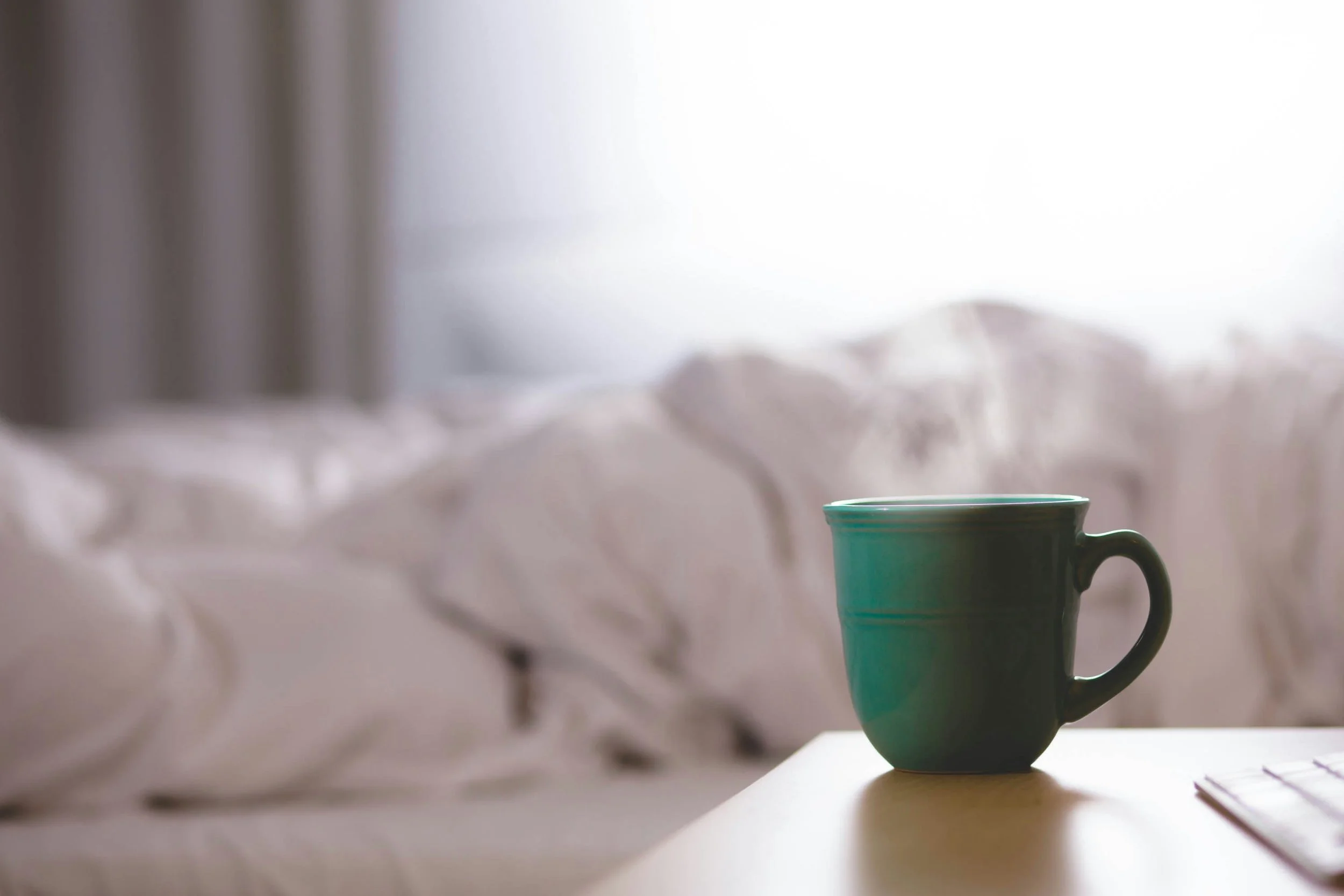
But, Sleep isn't Downtime. It's Repair Work.
ᶻ 𝗓 𐰁 Sleep ᶻ 𝗓 𐰁 isn't a passive pause button. Sleep is an active biological process that supports the brain, body, and emotional wellbeing, much like taking our car in for a routine service.
Sleep clears out the metabolic "waste" that builds up over the day, consolidates memories, and processes emotional experiences we didn't have time to sit with while we were awake. Cut that process short night after night, and we're not just tired. We're disrupting our brain's natural recovery system.
For working adults, this matters because sleep affects how we think, feel, focus, decide, and respond to stress.
Quantity vs. Quality: Which One Actually Matters?
Hint: both 😉.
When we talk about better sleep, we often focus on how many hours we get.
This is sleep quantity or how LONG we sleep.
Most adults are advised to get at least 7 hours of sleep each night on a regular basis, although individual needs may vary. When we regularly sleep less than what our body needs, we begin to accumulate sleep debt. Over time, this can increase the risk of physical and mental health concerns (Watson et al., 2015).
But sleep quantity is only one part of the picture!
Sleep quality refers to how WELL we sleep.
Sleep quality is trickier than sleep quantity. Sleep quality depends on how often we wake during the night, how much time we spend in deep and REM stages, and more. The simplest way to think about it: good sleep quality is a sleep that is reasonably continuous, refreshing, and restorative. Someone may spend seven or eight hours in bed but still wake up feeling tired. Another person may sleep for a shorter period and feel more rested because their sleep was deeper and less disrupted.
Quantity can't fully make up for poor quality, and quality can't fully make up for too little time in bed. The goal is optimising both, not picking one.
The "I Can Just Push Through"
A lot of us believe we can train ourselves to function on less sleep. In reality, what often changes is not our need for sleep, but our perception of tiredness.
We adapt to feeling slightly tired, foggy, or less alert. After a while, this state starts to feel normal, and we carry on with our day. Meanwhile, our cognitive performance is quietly declining and our reaction times are slowing down until one day we notice we're making more mistakes, losing focus more easily, or forgetting things we'd normally remember 😵💫. This gradual decline was documented by Van Dongen and colleagues (2003), whose research found that even moderate, sustained sleep restriction seriously impairs waking performance, whether or not we feel impaired.
Yes, some people genuinely function well on less sleep due to biological differences. But for most of us, needing caffeine to stay alert, sleeping much longer on weekends, or struggling to focus during quiet moments may be signs that we are not getting enough restorative sleep.
Can Weekend Sleep Repay the Debt?
Yes, that would be the answer that we hope for. Unfortunately, paying off sleep debt isn't as simple as paying off a credit card balance.
Depner et al. (2019) found that while sleeping in on weekends does reduce tiredness somewhat, it doesn't fully reverse the effects of a week of insufficient sleep.
Sleep debt is not like financial debt! We cannot always pay it back neatly in one large weekend instalment. This is important for us who run on short sleep from Monday to Friday and hope to “repay” everything on Saturday or Sunday.
A more helpful approach is to build a more consistent sleep rhythm across the week.
Consistent sleep and wake times help anchor our internal body clock, which in turn influences alertness, hormone production, body temperature, and overall energy regulation.
In other words, the "I'll sleep it off Saturday" plan is more of a partial patch than a real fix.
What We Actually Gain From Sleeping Well
Sleep supports several areas that matter in everyday working life.
Physical health 💪 🫀. Sleep helps regulate heart rate, breathing, blood pressure, and tissue repair. It also supports immune and hormonal functions.
Cognitive function 🧠. Consistent, good-quality sleep supports attention, memory consolidation, and executive functions like decision-making, working memory, and impulse control; the exact skills we rely on at work every day.
Emotional wellbeing. Good sleep makes it easier to stay within our window of tolerance (Siegel, 2012), or our capacity to handle uncomfortable feelings will increase. This means we may become less irritated, slower to feel overwhelmed, or easier to manage stress.
Last but not least, it is also important to acknowledge that sleep difficulties are not always caused by poor sleep hygiene or habits. Some people live with conditions like insomnia, sleep apnea, or narcolepsy that make good sleep difficult, no matter how disciplined their routine is. If that sounds like you, this isn't a willpower problem, and it's worth talking to a professional.
Let's Clear Up Some Myths
Before we dive deep into what to do, let's address some common misconceptions.
Myth: Sleep habits have no real impact on chronic physical conditions like obesity or diabetes.
Truth: Insufficient sleep is directly linked to an increased risk for several chronic physical conditions like obesity or diabetes.
Myth: You can train your body to function on less sleep.
Truth: You may feel you've adapted, but research shows performance, reaction time, decision-making, and memory continue to decline with chronic sleep restriction or increasing sleep debt.
Myth: You can catch up on lost sleep over the weekend.
Truth: Sleeping in may reduce sleepiness temporarily, but it does not fully reverse the health and cognitive effects of chronic sleep deprivation. Moreover, sleeping in creates an irregular sleep schedule that confuses our internal biological clock.
Myth: The older we get, the less sleep we need.
Truth: Sleep patterns do change as we age (lighter sleep, wake more often, and take more naps), but the actual amount of sleep our body needs does not decrease.
Myth: How many hours you sleep is all that matters.
Truth: Sleep quality matters just as much as duration. Waking up more often, untreated sleep disorders, or poor sleep can leave us tired despite spending enough hours in bed.
Myth: If you can't fall asleep, stay in bed until you do.
Truth: Sleep experts recommend getting up after about 20 minutes of not being able to fall asleep, doing something calming in dim light, and returning to bed once drowsy. This helps the brain associate the bed with sleep rather than frustration and restlessness.
Myth: Waking up in the middle of the night means something is wrong.
Truth: Brief awakenings during the night are normal. Sleep cycles are usually about 90 minutes long. At the end of a cycle, we might experience a brief waking period before transitioning into the next cycle. It’s often so brief that we don't even remember it in the morning.
Myth: Alcohol helps us sleep better.
Truth: Alcohol may help us fall asleep faster, but it reduces sleep quality. It leads to nighttime awakenings and leaves us feeling unrefreshed the next day.
A more helpful way forward
You don't need to change your entire routine to begin improving your sleep. Start with one (or both) of these.Create a Work Shutdown Ritual
About 30 to 60 minutes before bed, create a clear boundary between work and rest.
This can include turning off work notifications, writing tomorrow’s to-do list, closing your laptop, or doing something calming such as light stretching, reading, or listening to soft music.
The goal isn't to force sleep but to signal to our minds that the working day is over ✌️!
Stop fighting with the bed.
If you have been lying awake for some time and are becoming increasingly frustrated, get out of bed and move to a quiet, dimly lit space.
Do something calming until you feel sleepy 🥱 again. Then return to bed. This helps reduce the association between bed and frustration.
Avoid repeatedly checking the clock, as this can increase pressure and alertness.
Remember, the goal is NOT to have a perfect sleep.
The goal is to understand our sleeping patterns
and make sleep a more intentional part of our wellbeing.
Sleep isn't something to earn after everything else is done.
You’ve got this!
Depner, C. M., Melanson, E. L., Eckel, R. H., Snell-Bergeon, J. K., Perreault, L., Bergman, B. C., Higgins, J. A., Guerin, M. K., Stothard, E. R., Morton, S. J., & Wright, K. P. (2019). Ad libitum Weekend Recovery Sleep Fails to Prevent Metabolic Dysregulation during a Repeating Pattern of Insufficient Sleep and Weekend Recovery Sleep. Current Biology, 29(6), 957-967.e4. https://doi.org/10.1016/j.cub.2019.01.069
Siegel, D. J. (2012). The Developing Mind, second edition: How Relationships and the Brain Interact to Shape Who We Are. Guilford Press.
Watson, N. F., Badr, M. S., Belenky, G., Bliwise, D. L., Buxton, O. M., Buysse, D., Dinges, D. F., Gangwisch, J., Grandner, M. A., Kushida, C., Malhotra, R. K., Martin, J. L., Patel, S. R., Quan, S. F., & Tasali, E. (2015). Recommended Amount of Sleep for a Healthy Adult: A Joint Consensus Statement of the American Academy of Sleep Medicine and Sleep Research Society. Sleep, 38(6), 843–844. https://doi.org/10.5665/sleep.4716
Van Dongen, H. P., Maislin, G., Mullington, J. M., Dinges, D. F., & New Collective Author (2003). The cumulative cost of additional wakefulness: dose-response effects on neurobehavioral functions and sleep physiology from chronic sleep restriction and total sleep deprivation. Sleep, 26(2), 117–126. https://doi.org/10.1093/sleep/26.2.117


